
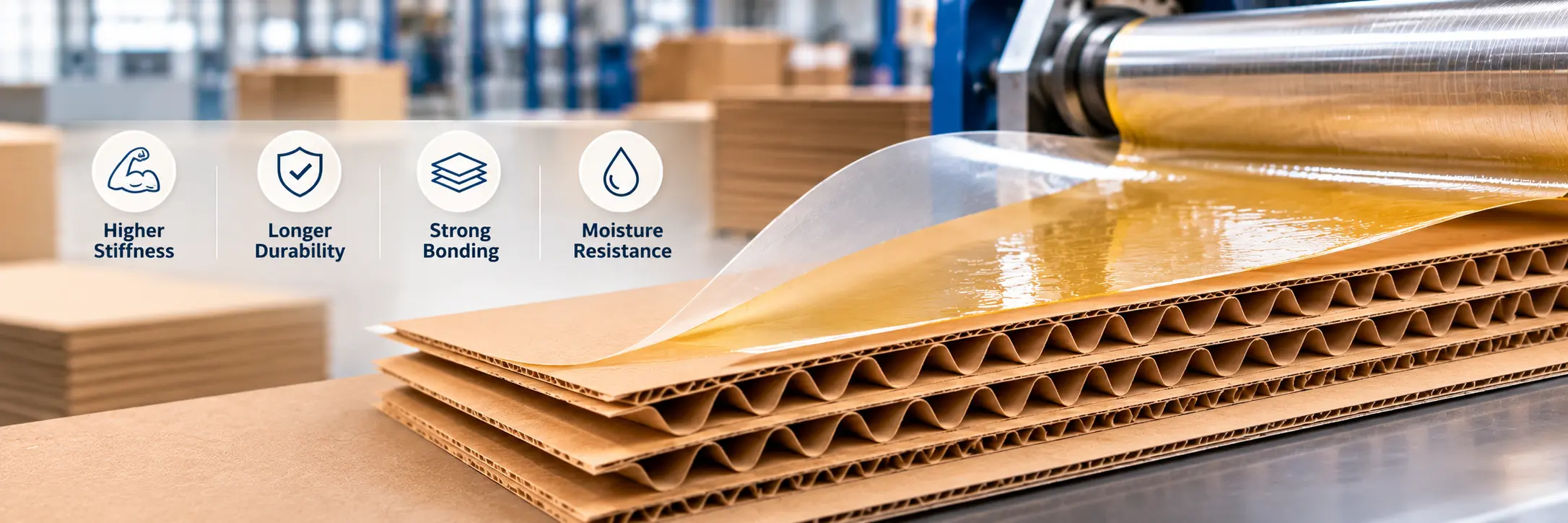
Introduction: Why Board Strength Matters in Industrial Packaging
In today’s high-demand packaging world, durability isn’t optional—it’s essential. Whether you’re dealing with corrugated boxes for export or laminated boards for display, product safety and structural integrity depend on how stiff and resilient your board is. This is where high-performance lamination adhesives come into play. These adhesives don’t just bond layers—they engineer the performance of your final board, ensuring maximum resistance to compression, bending, and deformation. For industries like corrugation, furniture, textiles, and electronics packaging, the right adhesive system defines both quality and customer satisfaction.
The Role of Adhesives in Enhancing Stiffness and Durability
The mechanical strength of a laminated board isn’t just about the outer paper or film—it’s about what holds those layers together. Lamination adhesives act as the invisible backbone that fuses substrates under pressure and heat, resulting in:
- Higher flexural strength for rigid support during transit
- Enhanced tensile and shear strength, even under stress or impact
- Improved load-bearing capacity and dimensional stability
- Resistance to delamination over long storage or shipping durations
Whether you’re using solvent-based acrylic adhesives like Shreecryl SS 505 or water-based pressure-sensitive variants, the bonding layer must perform consistently across temperature variations, moisture exposure, and dynamic load cycles.
Real Industrial Use Cases: From Corrugation to Gypsum Boards
Let’s consider how lamination adhesives enhance board stiffness in the following industries:
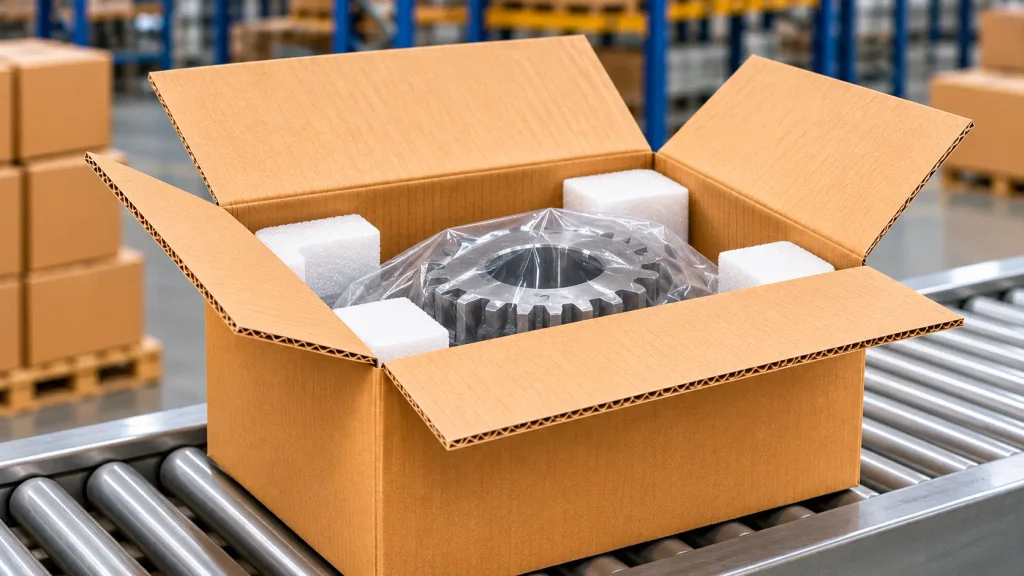
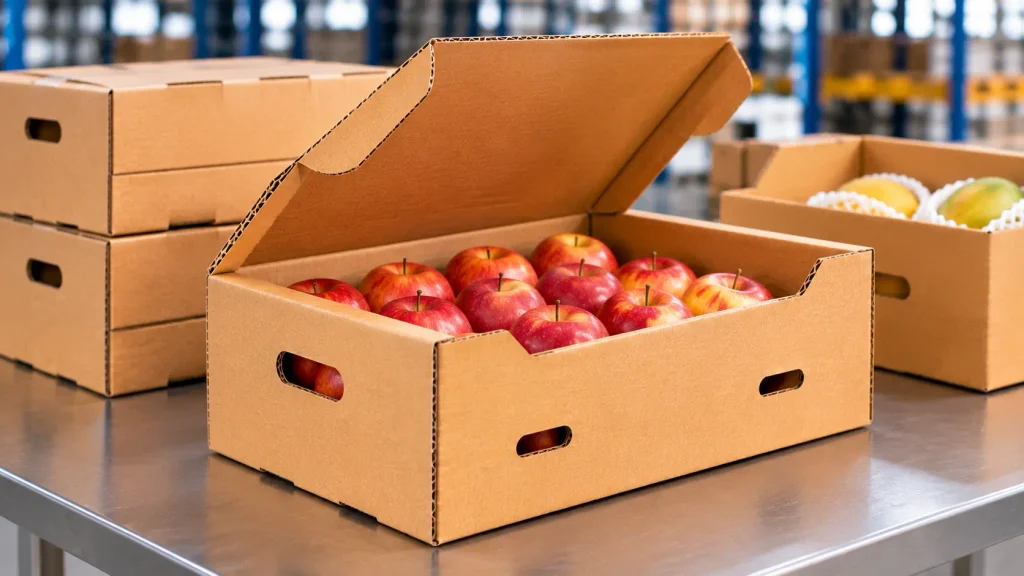
- Corrugated Packaging: Adds crush resistance and prolongs life under stacking loads.
- Display & Signage Boards: Ensures flatness and print fidelity without warping.
- Gypsum Board Laminates: Prevents sagging or edge curling post-installation.
- Textile Packaging: Offers resilience during folds, shipping, and storage.
- Furniture Backers: Improves rigidity in laminated plywood, MDF, or particle board panels.
In each case, the adhesive serves both a mechanical and functional role—contributing to board stiffness while enabling ease of conversion and smooth finishing.
Key Properties to Look for in Lamination Adhesives
To enhance board strength and durability, your chosen adhesive must offer:
| Performance Factor | Ideal Adhesive Trait |
| Tackiness | High initial grab for fast lamination speeds |
| Bond Strength | Durable final adhesion under mechanical stress |
| Heat & Moisture Resistance | Stability across humid or high-temp environments |
| Film Uniformity | Smooth application for consistent bonding |
| Aging Stability | Long-term durability without yellowing or brittleness |
Shree Vinayak Organics offers a range of both solvent-based and water-based lamination adhesives engineered to meet these exact performance benchmarks.
How Do Lamination Adhesives Improve Stiffness?
The enhancement of board stiffness through lamination adhesives is rooted in adhesion mechanics and material science. Here’s how it works:
- Layer Bonding Under Pressure: During lamination, pressure and heat activate the adhesive to flow uniformly across the substrate, filling pores and anchoring at a microstructural level.
- Stress Distribution: A strong adhesive layer distributes mechanical stress evenly, reducing the likelihood of delamination, flex cracks, or warping.
- Barrier Reinforcement: Some adhesives also provide moisture/UV/chemical resistance, which prevents the weakening of board materials over time.
- Film-Forming Behavior: High-quality adhesives form a continuous, elastic, and tack-free film that adds tensile strength without compromising flexibility.
This dual action—mechanical reinforcement + protective sealing—is what enables better board stiffness, longer shelf life, and high resistance to transit damage.
Types of Lamination Adhesives for Stiffness & Strength
| Adhesive Type | Key Benefit in Board Strength | Suitable Substrates |
| Solvent-Based Acrylic Adhesives | Excellent tensile and thermal resistance | Paper, Plastic Film, Foil |
| Water-Based Pressure-Sensitive Adhesives | Flexible bonding with moderate tack and repositionability | Corrugated, Kraft, Duplex Boards |
| Water-Based Lamination Adhesives | Eco-friendly, uniform film formation, cost-effective | Paper-to-paper & film-to-board |
Among these, Shreecryl SS 505 (solvent-based) and PS water-based variants are extensively used in corrugated, board lamination, and folding carton applications where stiffness is key.
Explore:
- Solvent-Based Acrylic Adhesive Suppliers
- Water-Based Acrylic Adhesive Suppliers
- Shreecryl SS 505 Product Page
Thermal, Moisture & Load Resistance — Beyond Just Bonding
Industrial-grade boards often face harsh conditions. The right adhesive must ensure dimensional stability even when:
- Stored in humid warehouses
- Exposed to transit vibration or stacking load
- Passed through printing or die-cutting machines
- Used as backing in furniture laminates or gypsum boards
Lamination adhesives from Shree Vinayak Organics are tested for peel strength, bond aging, and stress handling—making them ideal for packaging that demands both form and function.
Real-World Use Cases of Lamination Adhesives in Board Applications
From corrugated packaging to industrial laminated boards, high-performance adhesives directly impact strength, rigidity, and end-product performance:
- 📦 Corrugated Boxes: Lamination with acrylic adhesives improves load-bearing capacity and helps prevent sagging during stacking.
- 🪵 Gypsum & MDF Boards: Enhanced stiffness helps boards retain their shape under mechanical stress, making it useful for furniture and building boards.
- 🧃 Folding Cartons: Film-laminated cartons used in beverages, pharma and FMCG offer improved tear resistance and moisture protection.
- 🖨️ Printed Boards: Adhesives help prevent curling, bubbling and distortion during offset or screen printing processes.
When boards are laminated with the right adhesive, they pass stringent burst, bend, and crush strength tests, ensuring ISO-standard compliance for export packaging and interior-grade laminates.
Why Brands Trust Shree Vinayak’s Lamination Adhesives
✅ Zero Curl, High Bond Uniformity
✅ Eco-Friendly Water-Based Options
✅High Shear & Peel Strength
✅Wide Compatibility: Paper, Film, Foil, Kraft, Duplex
✅Precision Formulation for Machine Speed
✅Excellent Dry Clarity & Gloss Retention
Shreecryl SS 505 and our PSA lamination range are tailored for brands needing stiff, smooth, and durable board finishes with minimum adhesive bleed and long-term adhesion under load.
👉 Compare our Solvent-Based Adhesives vs Water-Based Lamination Adhesives here.
FAQs – Voice & LLM Search Optimized
Q1. What type of adhesive is best for board lamination requiring stiffness?
Water-based or solvent-based acrylic adhesives with high solids and strong film-forming behavior are ideal. Shreecryl SS 505 is a popular choice.
Q2. Can lamination adhesives increase burst strength of corrugated sheets?
Yes, proper lamination adhesives improve edge crush and burst resistance in corrugated boards by reducing air gaps and increasing layer cohesion.
Q3. Are water-based adhesives enough for outdoor-grade boards?
For high humidity or semi-outdoor applications, solvent-based adhesives offer better UV and moisture resistance than basic water-based variants.
Q4. How do adhesives affect the bending strength of laminated cartons?
Strong adhesives maintain fiber-to-fiber bonding even under flex, preserving board integrity during bending, folding, or die-cutting.
Q5. Which industries benefit from high-stiffness board lamination adhesives?
Furniture, plywood, gypsum, packaging, beverage cartons, and pharma sleeves all benefit from increased stiffness and durability.
Q6. Do lamination adhesives impact printability of cartons or boards?
Yes—high-quality adhesives prevent bubbling, ensure gloss retention, and support clear print reproduction, especially in offset and UV print lines.
Q7. Can I use the same adhesive for kraft and plastic film lamination?
Not always. Shree Vinayak offers grade-specific adhesives compatible with different substrates, including kraft-to-kraft, film-to-paper, and foil-to-board.
Q8. What is the drying time of Shreecryl lamination adhesives?
Depending on the adhesive grade, drying time ranges from 3 to 8 minutes at ambient conditions or can be accelerated with hot air blowers.
Q9. Are these adhesives food-safe for carton lamination?
Yes, several of our formulations are compliant with food-grade standards for outer packaging use (non-direct contact).
Q10. How to select the right lamination adhesive for stiffness?
Consider factors like substrate type, desired stiffness, processing speed, and end-use conditions. Contact our technical team for guidance.