
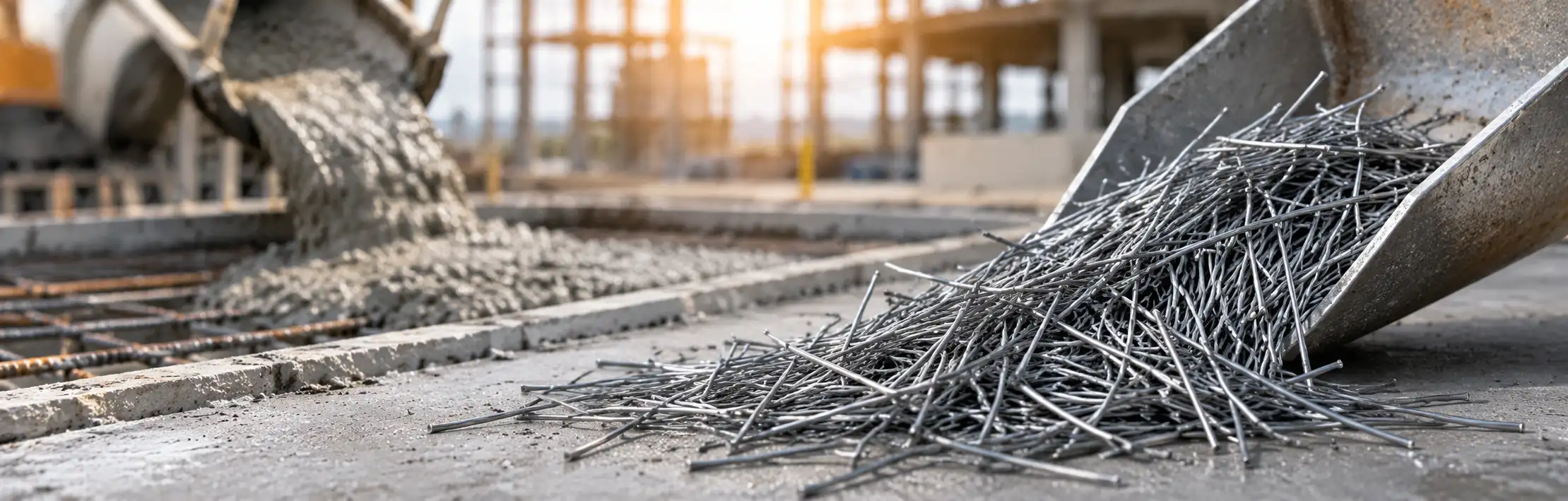
Steel fibres are used in concrete applications where reinforcement needs to be distributed throughout the mix. Before they reach the concrete mixer, however, the fibres must be packaged, transported, stored and fed into production in a practical way. A binder used to hold steel fibres together has to meet two needs: keep the fibres in manageable bundles during handling, then allow them to separate and disperse when introduced into the concrete mixing process. This is where a water-soluble binder for steel fibres can play an important role.
Why are steel fibres bundled?
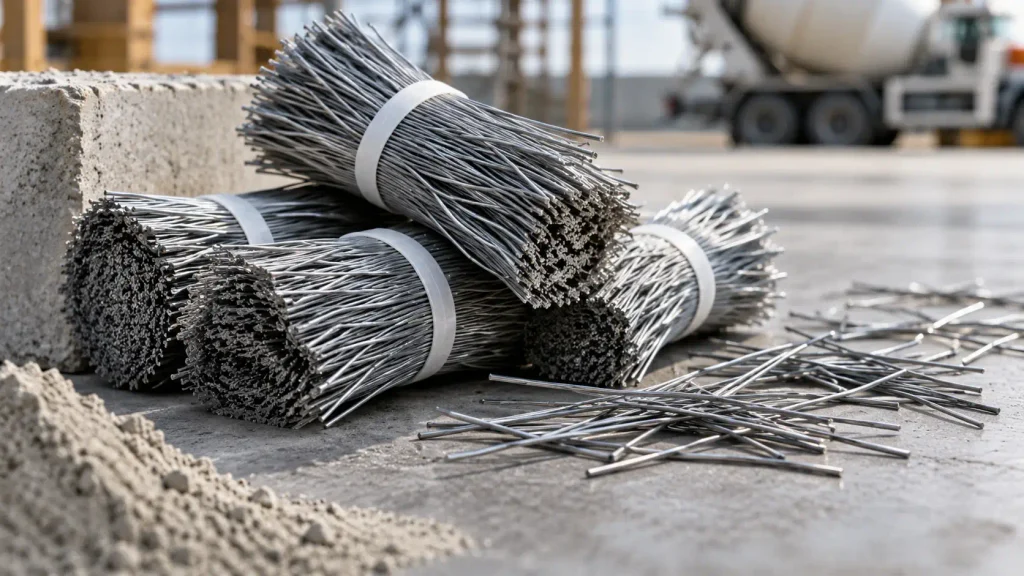
Steel fibres are often supplied in bundles to make handling and dosing more convenient. Bundling can help reduce loose-fibre handling and support a more controlled feeding process. But the bundle is not intended to remain intact in the finished concrete. During mixing, the fibres need to separate sufficiently to distribute through the mix according to the project and product requirements.
If bundles do not break apart as intended, clusters of fibres may remain. This can create uneven distribution and make it harder to achieve consistent mixing. The bundling material therefore has to be selected with both the handling stage and the mixing stage in mind.
What does a water-soluble binder do?
A water-soluble binder is designed to hold fibres together during handling while being capable of dissolving or dispersing in the presence of water under the intended process conditions. In steel-fibre concrete applications, the objective is to support bundle integrity before use without preventing the fibres from separating during mixing.
Solubility alone does not tell the whole story. The rate at which the binder dissolves, the way it behaves in the actual mix, and how the fibre bundle responds to the mixing process can all affect practical performance. The binder should therefore be evaluated in the context of the fibre geometry, bundle format, dosage, water availability and mixing procedure.
Why fibre dispersion matters
The value of steel-fibre reinforcement depends in part on how consistently the fibres are distributed through the concrete. Clumping or uneven distribution can create variability and may complicate production. Good dispersion helps the fibres become part of the mix as intended, subject to the concrete design, fibre specification and mixing process.
The binder is one part of this system, not the only factor. Fibre length and shape, bundle construction, mixing sequence, mixing time, concrete composition and equipment all influence the final result. For this reason, binder performance should be assessed through a practical mixing trial rather than inferred from a specification sheet alone.
Key properties to evaluate when selecting a binder
When comparing binders for bundled steel fibres, manufacturers and concrete technology teams should agree on the handling and end-use requirements first. Relevant considerations may include:
- Bundle integrity during packaging, transport, storage and dosing.
- Water solubility or dispersibility under the actual mixing conditions.
- Release of individual fibres from the bundle during mixing.
- Compatibility with the fibre type and bundling process.
- Consistency from batch to batch and suitability for the intended production workflow.
- Storage stability and handling requirements before use.
Test the binder in the intended mixing process
A meaningful evaluation should cover both stages of use. First, check whether the binder holds the fibres together through normal handling and feeding. Then run a controlled mixing trial using the intended fibre bundle, concrete mix design, mixing equipment and procedure. Observe whether bundles separate as expected and whether the fibres distribute consistently.
Record the trial conditions and define acceptance criteria before moving to regular production. If the concrete producer or project specification sets particular requirements, those should guide the evaluation. Avoid relying only on a simple water-solubility demonstration if it does not reproduce the real mixing process.
Applications and the supply chain
Steel-fibre-reinforced concrete is used in a range of infrastructure and construction contexts, which may include tunnels, metro projects, industrial floors and other engineered concrete applications. The binder is generally selected upstream by the steel-fibre manufacturer or supplier, in coordination with the fibre production process and the requirements of downstream concrete users.
This means that binder selection is not simply a construction-site purchasing decision. Steel-fibre manufacturers need a solution that fits their bundling process and produces fibres that can be handled efficiently and perform as intended when used by concrete producers.
Questions to discuss with a binder supplier
- What steel-fibre type, dimensions and bundle format are being used?
- What level of bundle strength is needed during handling and dosing?
- What water and mixing conditions are expected at the point of use?
- How will fibre release and dispersion be evaluated?
- What storage conditions and shelf-life expectations apply?
- What trial protocol and acceptance criteria will the customer require?
Choose for both handling and dispersion
A suitable water-soluble binder for steel fibers has to balance bundle integrity with release during mixing. The best selection depends on the fibre and bundling process, the expected storage and handling conditions, and the concrete mixing environment. Clear requirements and controlled trials help manufacturers assess whether a binder fits the complete application.
Shree Vinayak can discuss binder requirements for steel-fibre bundling with manufacturers evaluating handling, water solubility and dispersion. Share the fibre specification, bundle format and intended mixing conditions so that potential suitability can be reviewed with the technical team.
Suggested internal links: Link naturally to relevant Shree Vinayak application pages and to the appropriate water-based or solvent-based adhesive technology page, where those pages accurately match the article. Suggested image alt text: bundled steel fibres for concrete reinforcement with a water-soluble binde.
steel fibres are sometimes chromium coated .