Tamper-evident labels are designed to help show whether a package, product or closure may have been opened or interfered with. They are used in a range of applications, from electronics and consumer products to logistics, packaging and authentication. While the visible security feature often gets the most attention, the adhesive is an important part of the overall construction. If the adhesive does not interact as intended with the label material and the target surface, the security function may not work reliably.
The adhesive is part of a complete security system
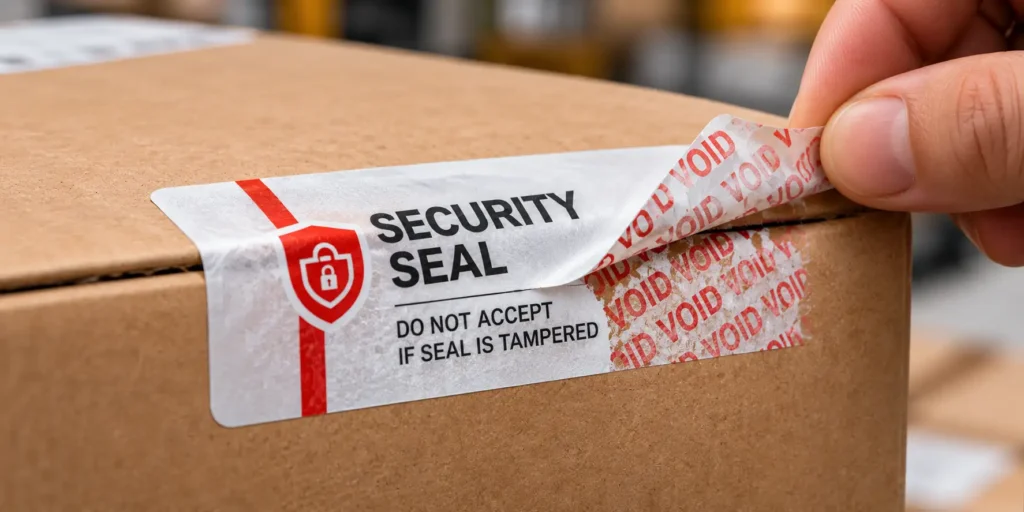
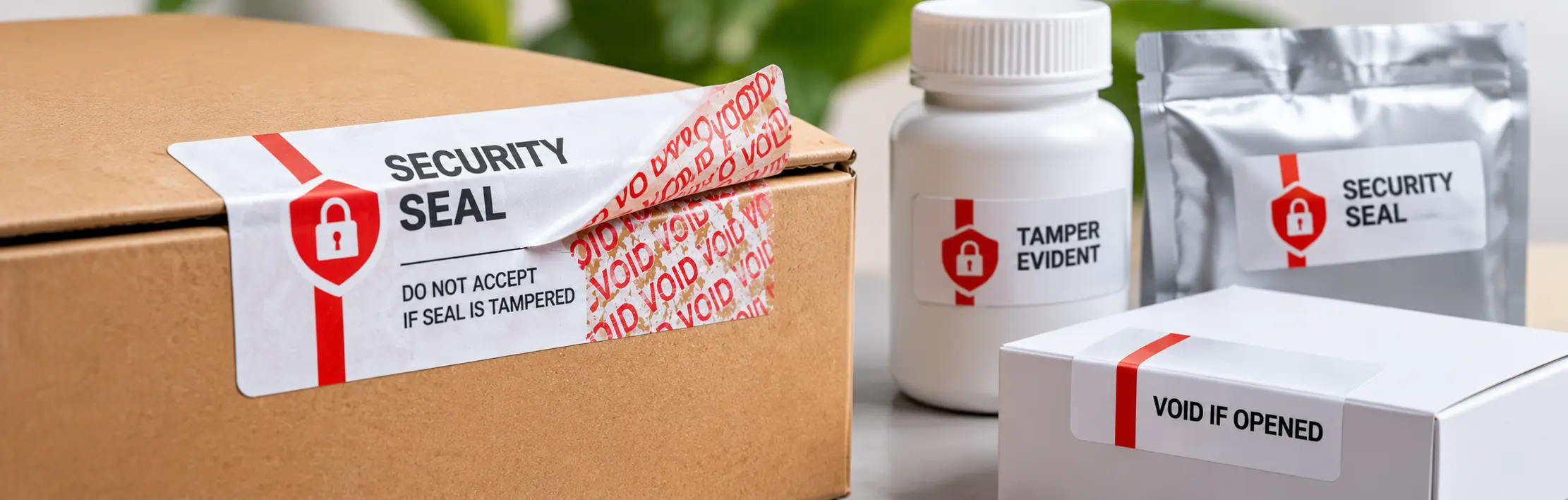
A tamper-evident label is not made secure by adhesive alone. Its performance depends on the combination of face material, security design, adhesive, substrate and application method. Some constructions are designed to leave a visible message or pattern when removal is attempted. Others may fracture, delaminate or show clear evidence that the label has been disturbed.
The right behaviour depends on the design. A label intended to reveal a void message, for example, has different requirements from a destructible label that breaks into small pieces. It is important to define the intended tamper indication before selecting an adhesive.
Bonding must suit the target surface
Security labels can be applied to cartons, coated paperboard, plastic housings, glass, painted metal and other surfaces. These substrates do not all behave the same way. Surface energy, texture, coatings, curvature and contamination can affect the bond. Some plastics, including PE and PP, can be more challenging to bond than glass or many metals.
A security label designed for a smooth metal panel may not provide the same removal behaviour on a textured plastic enclosure. Likewise, a dusty carton or a surface carrying mould-release residue may interfere with bonding. The actual application surface should therefore be part of the adhesive selection process.
Define what should happen when removal is attempted
One of the most important questions is what evidence the label must leave behind. Should a message become visible? Should the face material break apart? Should the label resist removal strongly enough that it cannot be lifted intact under the intended conditions? These are different requirements and may call for different label constructions.
It is also necessary to consider the possibility of false confidence. A label may look secure during a quick visual check but still fail under a particular removal method, temperature or surface condition. The label design and adhesive need to be evaluated together, using realistic tampering scenarios agreed by the product or security team.
Consider the product’s storage and handling conditions
Packages may move through warehouses, vehicles, retail environments and end-user locations before they are opened. During this journey, labels can encounter temperature swings, humidity, condensation, abrasion and repeated handling. A label applied at one temperature may later be stored or used in a very different environment.
Where the label is used on products exposed to oils, cleaning fluids or outdoor conditions, these factors should be included in testing. If the security label is part of a regulated or high-value product system, the relevant customer specifications and compliance requirements should also be identified early.
Test the complete label construction
A useful evaluation should use the intended label material, adhesive, print or security layer, and the actual surface. Samples should be applied using the planned production process and then evaluated after a defined dwell period. Test plans may include adhesion checks, edge-lift observations, removal attempts, environmental conditioning and inspection of the tamper indication.
Testing should cover the real variation found in production. Different coatings, mould finishes, carton grades or cleaning methods may change the result. Agree on pass/fail criteria before approval, and record the conditions under which the sample was tested.
Questions to discuss with your adhesive supplier
- What type of tamper indication is required?
- What substrate and surface finish will the label be applied to?
- Does the label need to remain intact during normal handling but show evidence of attempted removal?
- What temperature, humidity, chemical or abrasion exposure is expected?
- Will the label be applied manually or on an automated line?
- What test method and acceptance criteria will the customer use?
Reliable security labels start with clear specifications
The most suitable adhesive is the one that supports the intended security behaviour as part of the complete label construction. Clear specifications, realistic testing and close coordination between the label converter, adhesive supplier and end customer help reduce the risk of unexpected failures.
For security, void and tamper-evident label applications, Shree Vinayak can be approached to discuss the application requirements and the adhesive technology options that may be relevant. Final suitability should be confirmed through product-specific technical review and testing.
Suggested internal links: Link naturally to Shree Vinayak’s relevant acrylic adhesive, water-based adhesive, solvent-based adhesive, and application pages where those pages accurately match the article topic.